

Poetry, if it’s free, must engage widely. It must look everywhere. It must look particularly at itself, hard.
The poetry we call “political,” engaged in the shared public moment, can be alive only for that moment, in that place. But it can also have ongoing currency.
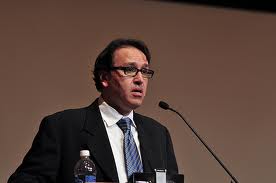
Libyan-American poet Khaled Mattawa seems to be one of those broad poetic spirits who can soak up and celebrate Adonis’s great talents, can translate, can range over history and sound and image, can engage in the moment, can surprise. And when he writes poetry of the moment (such as “Now That We Have Tasted Hope“), it is not just a metallic-tasting echo, but a rebirth.
Oh, and his “Tocqueville” has a sense of humor, too.
Read it:
Mattawa’s poems on Web del Sol
Conversation with Mattawa on PBS NewsHour’s Art Beat
Interview and “The Old House with Thee” on Blackbird
“Ecclesiastes,” from Mattawa’s most recent collection, Tocqueville, reviewed here by Hilary Plum on KRO and here by “aka Joe” on his blog.
The whole opening to Tocqueville
*More easily than novelists? Oh, I don’t know. Maybe.