


NAGUIB MAHFOUZ (“Fear”, “Before the Throne”)
Mahfouz’s short story “Fear” tells the story of a society controlled by various gangsters. That is, until a powerful army officer comes onto the scene, defeats the gangsters, and becomes the sole power. Mahfouz told Mohamed Salmawy, “More than once, I was stopped by [Egyptian] officers in the street. And they would question me straight away about what I meant by the story and who was the real life character of the despotic officer in the story.”
Mahfouz found ways of not answering that question, including in his later interview with Salmawy.

In one of Mahfouz’s post-Nasser works, Before the Throne, (1983) the rulers of Egypt are each called to explain themselves, from Egypt’s earliest days through Anwar Sadat. While Ramesses II is portrayed as a big fan of Abdel Nasser’s, this opinion was not shared by all. Menes, for example, announced, “Your interest in Arab unity was higher than your interest in Egypt’s integrity[.]”
Later, in the 2009 translation by Raymond Stock:
“True democracy to me,” swore Abdel-Nasser, “meant the liberation of the Egyptians from colonialism, exploitation, and poverty.”
One-time Egyptian prime minister (1928) Mustafa al-Nahhas railed against the Abdel-Nasser regime, although allowing that Abdel Nasser “kept faith with the poor”:
“You were heedless of liberty and human rights,” al-Nahhas resumed his attack. “While I don’t deny that you kept faith with the poor, you were a curse upon political writers and intellectuals, who are the vanguard of the nation’s children. You cracked down on them with arrest and imprisonment, with hanging and killing, until you had degraded their dignity and humiliated their humanity…. See how education was vitiated, how the public sector grew depraved! … And what was the result? Clamor and cacophony, and an empty mythology — all heaped on a pile of rubble.”
WAGUIH GHALI (Beer in the Snooker Club)

About Ram’s friend Font, who has just been railing about Hugh Gaitskill’s betrayal of the anti-nuclear movement:
“Admittedly he began by being furious about Egyptian internal politics as well, but that too was ludicrous, like a Lucky Jim would have been in England during Dickens’s time. It was like trying to ice a cake while it was still in the oven. Font knows how to trim a cake, and frost it, and garnish it with the latest decorations, but he doesn’t know how to bake the cake. So he has to wait for Nasser to bake it for him before he can add his own refinements—and he’s not too sure that he will be allowed to do that, even later on.”
SONALLAH IBRAHIM (Zaat)
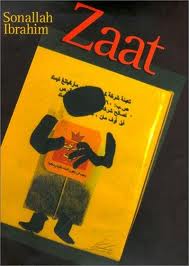
And then, in this quite funny passage, which speaks for itself:
“The nocturnal visits that Zaat received increased. They had at first been confined to her father and Gamal Abdel Nasser, but they had now been joined by Manal’s husband after he got his PhD…. These visits were characterized by a considerable amount of sweet tenderness until some violence started to creep in. Gamal Abdel Nasser would regularly turn away fro her all of a sudden and charge into the kitchen, pick up a hammer, and lay into the walls and cupboards, then move onto the bathroom. Zaat would wake up terrified, shouting: ‘The kitchen…the bathroom…’ Abdel Maguid would rush off to get her a glass of water, annoyed that Gamal Abdel Nasser was coming round to his flat, providing with his attitude toward the walls one more addition to a record laden with crimes of aggression against the rights and property of others. When he came back with the glass, some hope had returned, and he asked his wife: ‘Are you sure it was Abdel Nasser and not El Sadat?’
GAMAL al-GHITANI (Zayni Barakat)

In Said’s foreword, he insists that:
“Al-Ghitani’s disenchanted reflections upon the past directly associate Zayni’s rule with the murky atmosphere of intrigue, conspiracy and multiple schemes that characterized Abdel Nasser’s rule during the 1960s, a time, according to Ghitani, spent on futile efforts to control and improve the moral standard of Egyptian life, even as Israel (the Ottomans) prepared for invasion and regional dominance.”
MOHAMED MANSI QANDEEL (Moon over Samarqand)

Character Nurallah tells the novel’s narrator of how he had to board a plane as a delegation of Soviet Muslims to show his support for Abdel Nasser “for what he was doing to the Muslims in his country. An ironic paradox. … But I boarded a plane amid a delegation of dummies, and went with them to congratulate Abdel Nasser because he had deigned to arrest Sheikh Qutb.”
When Nurallah speaks with Qutb in Cairo, he asks about Abdel Nasser, “Is he really such a false god?” Qutb tells him that he once believed in the free officers “more than I should have.” Qutb had defended their mistakes, but he “could not defend them as they turned away from Islam.”
Later, about Nurallah’s meeting with Abdel Nasser:
“Several doors were opened before them and the corridors of the palace became a royal maze. They were slowly approaching Abdel Nasser. He stood before them, shaking their hands one after the other, and the cameras were struck with a mad fever. His face was darker than it appeared in photographs, but his piercing eyes lit his face and granted it a captivating magic. His large nose, however, revealed his all-engulfing tendency toward control.”
Nurallah tells Abdel Nasser that Sayyid Qutb “is frail,” but Abdel Nasser silences him.
Certainly there are numerous other depictions of Abdel Nasser. Please add others suggestions below as you see fit.