

My tribute in the Egypt Independent:
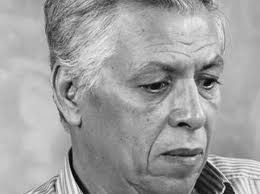
The curious and gifted storyteller died on Saturday, after a protracted battle with liver disease, at the age of 75.
El-Bisatie left his north Delta village as a young man to study commerce — which was not his choice — at university in Cairo. He did not return to his village. “Never,” he once told translator Denys Johnson-Davies. But the shores of Lake Manzalah stayed inside him, growing and developing into the most significant, gentle, and beautiful wellspring for his stories and novels.
He began his writing career with short stories, publishing his first volume of at the age of 31. His works were typically pithy, often humorous, sensuous, and memorable, earning him the title of the “poet of the short story.” He used the same poetic, episodic tools in his novels. During his thirty-year career, he published a number of short-story collections and more than a dozen novellas and novels. The haunting “Houses Behind the Trees” (1993/1997) was his first full-length work to be published in English translation, by Johnson-Davies.
However, Johnson-Davies says that Bisatie’s true contribution was to the Arabic short story. “I think that it was as a writer of short stories that he showed his real talent,” Johnson-Davies said over email. “He made no concessions to his readers and one felt that they either really got inside his stories or [they didn’t. And] he couldn’t care one way or the other.” Keep reading on EI.
The fuller text of comments by novelist, children’s-book author, and pioneer Arabic-English translator (and friend of the author) Denys Johnson-Davies, who translated El-Bisatie’s short-story collection A Last Glass of Tea and Other Stories, and his novels Houses Behind the Trees and Hunger. Johnson-Davies wrote in an email:
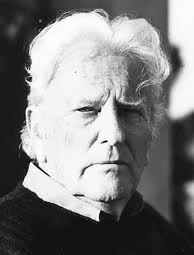
“Yes, you are right in saying that his work was never properly appreciated. I think that it was as a writer of short stories that he showed his real talent. He made no concessions to his readers and one felt that they either really got inside his stories or [not. And] he couldn’t care one way or the other.
” I think that Mohamed didn’t make the necessary moves to gain the fame that other – and perhaps less talented writers achieved. For me he was very much a writer’s writer.
“I feel that he has made a real name for himself without really making the sort of social effort that many writers are prepared to make.
“It is a great loss for Egypt and for the Arab world.”
Expanded comments by El-Bisatie translator and scholar Hala Halim, assistant professor at NYU, forthcoming, insha’allah.
Did you know that there was a graphic novel (in Dutch) based on El-Bisatie’s Over the Bridge?
Youssef Rakha on Mohamed El-Bisatie and other major Sixties-generation authors.
An excerpt from El Bisatie’s untranslated And the Train Comes: From Al Ahram Weekly.
And an excerpt from Hunger, also trans. the great DJD: From The International Literary Quarterly