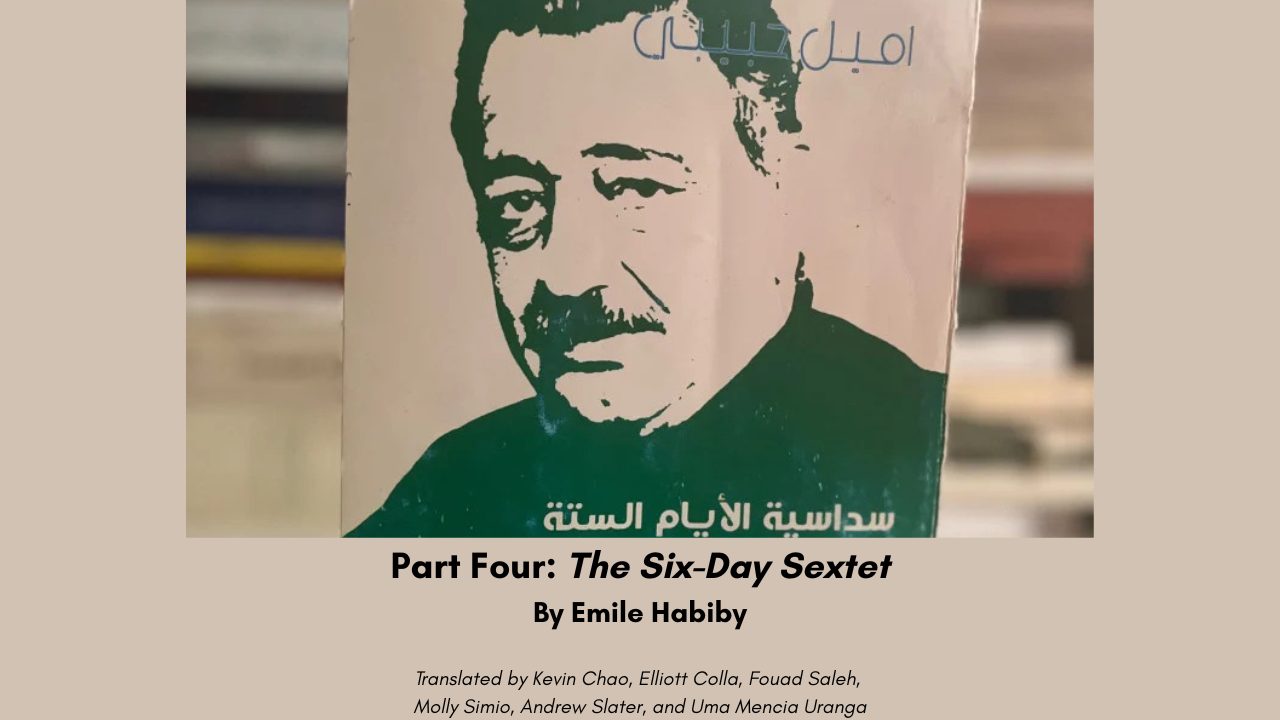
Part Four, Emile Habiby’s ‘The Six-Day Sextet’
This is the story of the protests that broke out in Jerusalem’s Old City on June 5, 1968, marking the one year anniversary of the Six-Day War.
This is the story of the protests that broke out in Jerusalem’s Old City on June 5, 1968, marking the one year anniversary of the Six-Day War.
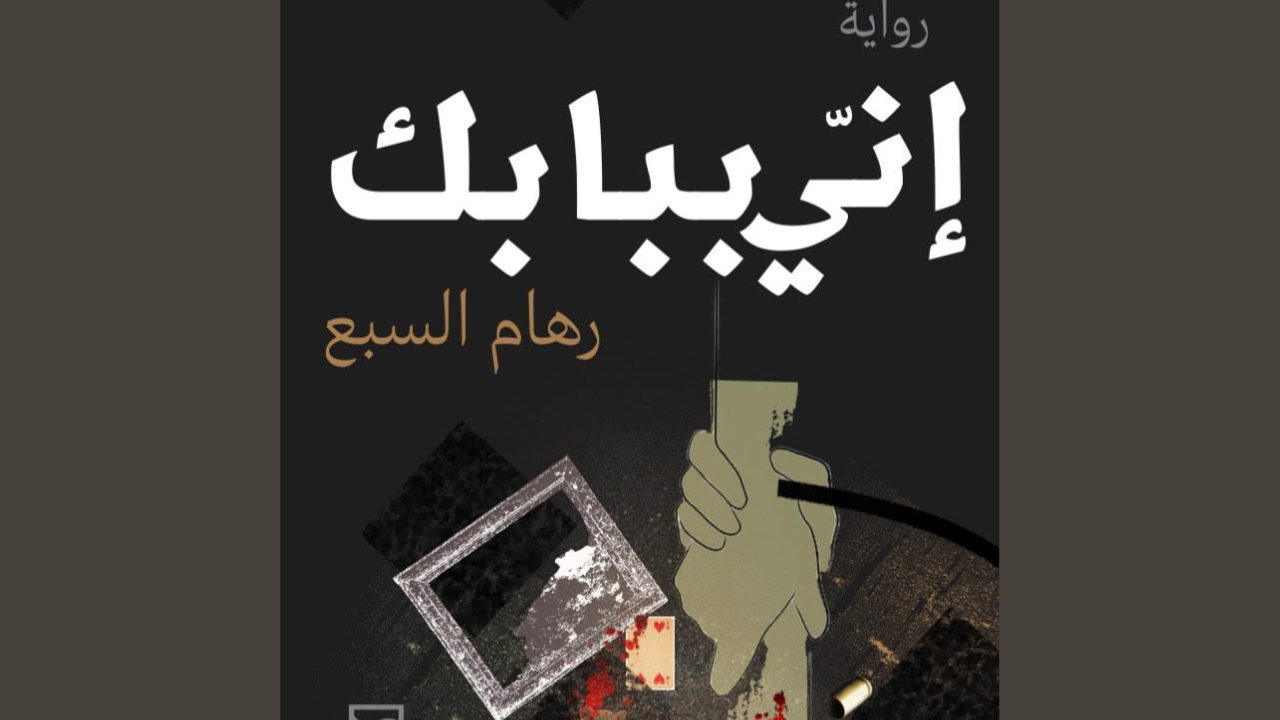
I Am at Your Door was written as a last resort for survival, as another form of life. In its pages, we read: “Is there anything more beautiful than writing while you are being exterminated? And here, I mean the ugly meaning of beauty.”

Over the next six weeks, we will be publishing installments of Emile Habiby’s The Six-Day Sextet, which is available in an open-access, non-commercial translation by Invisible Dragoman.
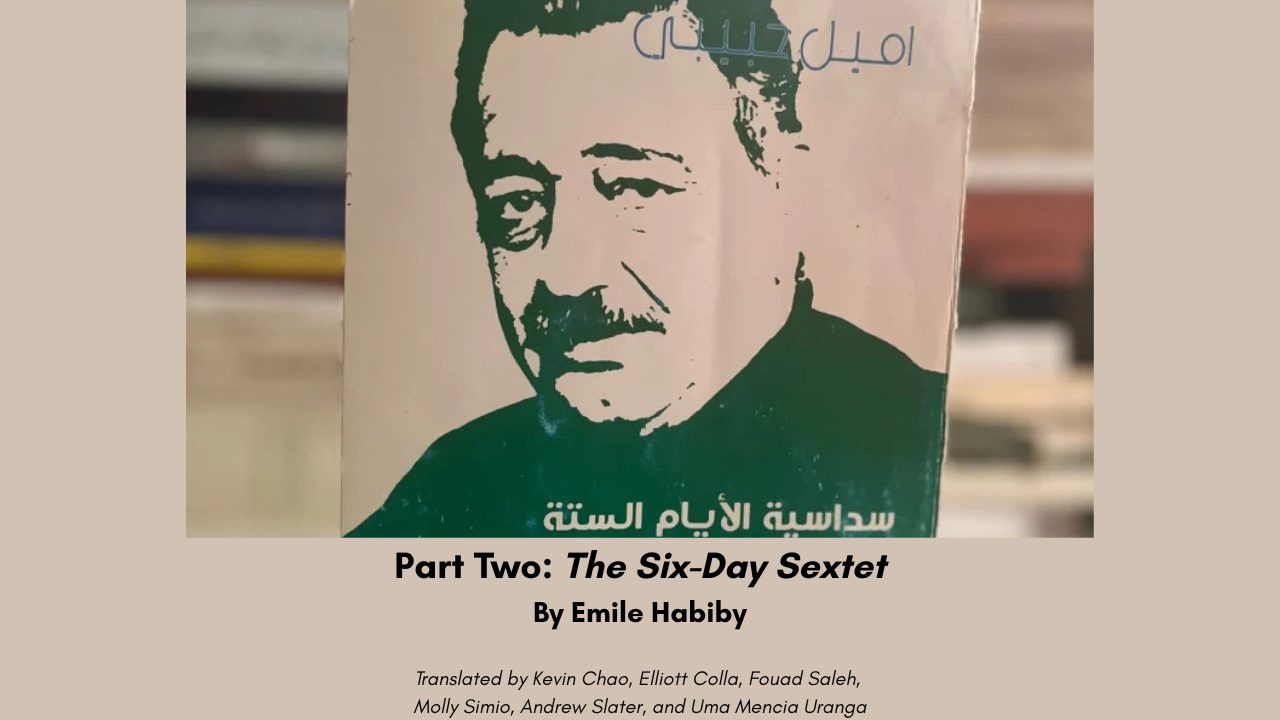
Over the next six weeks, we will be publishing installments of Emile Habiby’s The Six-Day Sextet, which is available in an open-access, non-commercial translation by Invisible Dragoman. The next installment is set to appear February 16, 2026.

Over the next six weeks, we will be publishing installments of Emile Habiby’s The Six-Day Sextet, which is available in an open-access, non-commercial translation by Invisible Dragoman. The next installment is set to appear February 9, 2026.

In this short fiction from Kuwait, the central character and his author are in a standoff over a telephone call.

Short fiction by Mohammed Hussein Heikal (1888 – 1956) about marriage and money in early twentieth century Egypt.

What happens on New Year’s Eve when a conservative (and naive) father comes to his son’s front door, in Cairo, and hears something he never expected? A holiday classic from Egyptian writer Ibrahim Abdelkader Al-Mazni (1889–1949).
New short fiction by the relentlessly creative Palestinian writer Nasser Rabah.