
‘I Do Not Wish For You To See Gaza As Anything But a Rose’
Gaza author Hedaya Shamun writes — although her writing rituals have disappeared — about the world she sees around her. Translation by Ghada Mourad and Tyson Patros.
Gaza author Hedaya Shamun writes — although her writing rituals have disappeared — about the world she sees around her. Translation by Ghada Mourad and Tyson Patros.
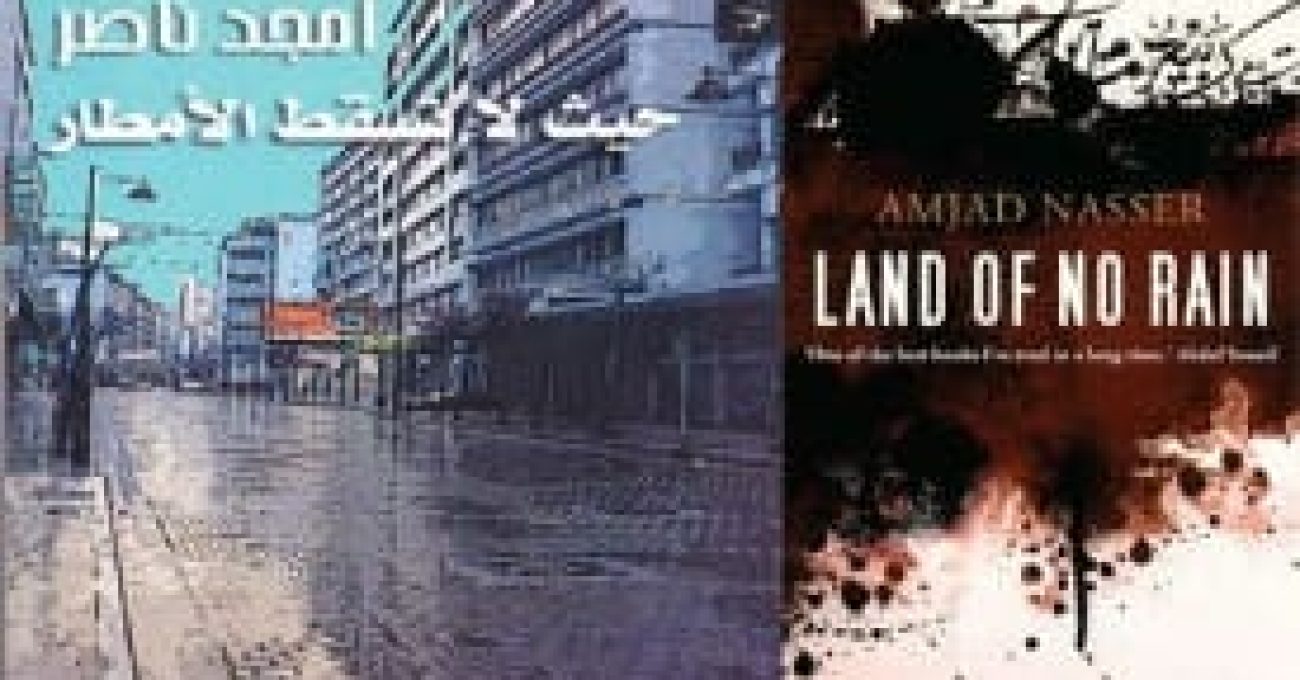
This year, 2014CE, hasn’t been a very particularly good one for real-world human ventures. Fortunately, however, it has been an excellent one for Arabic literature in translation: Iman Humaydan Younes’s circling “Other Lives”; Radwa Ashour’s emotional “Tantoureya” and “Blue Lorries”; Jabbour Douaihy’s sharp “June Rain”; Sonallah Ibrahim’s compelling “Stealth” was re-issued; two more volumes of the incredible “Leg over Leg”; several interesting collections. But the book that has made my year, thus far, is Amjad Nasser’s “Land of No Rain.”
The TEDxSana’a Book Club has established a small but vibrant book community in Yemen’s largest city, as reported in the Yemen Times this week. Now they’re looking to expand even more,
“But then I understood. There is some point where it’s impossible to cross the wall between two languages if you don’t change it.”
It’s not likely a good time to be raising funds for a three-day Arab-American literature conference — set to take place in Minneapolis, Minn. mid-September — but, if it weren’t for literature, how would we make the world bearable?
Some vision of “fidelity” to a translated work is surely necessary — otherwise, what would make it a translation? — but the “Temporary Center for Translation,” which opens tomorrow at the New Museum in New York, interregates “what exactly constitutes a likeness.”

As what would’ve been Tayeb Salih’s eighty-fifth birthday passes, eminent and pioneering translator Denys Johnson-Davies shares some reflections on his time with Salih when the great Sudanese novelist first joined the Arabic section of the BBC in London.
Any “listicle” on Gaza risks being an exploitative act, piggybacking on and redirecting attention from the current human catastrophe. But silence isn’t much of a solution, either. So, a list.
Sudanese novelist Tayib Salih (1929-2009) would have been 85 today. He was born in a village in north Sudan and originally intended to work in agriculture.