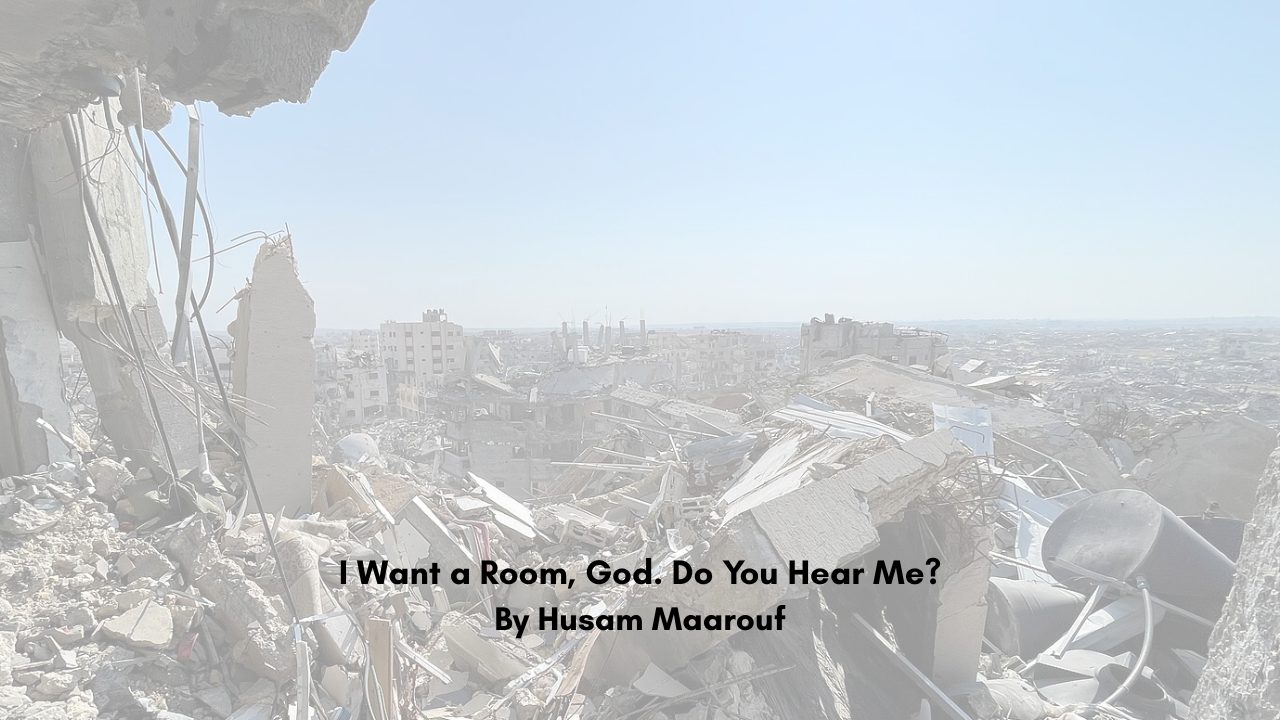
I Want a Room, God. Do You Hear Me?
“Even writing, even a warm home—I am afraid of losing them at any moment, of becoming homeless again, of searching for a language that resembles me.”
“Even writing, even a warm home—I am afraid of losing them at any moment, of becoming homeless again, of searching for a language that resembles me.”
“Seductive Life, don’t disguise yourself. We know you too well. We see you in the airports, embracing the newborns and the newdeads. You carry their pain and plant bewilderment inside them. “

Last week, we ran Fatena Abu Mostafa’s “A Life That Doesn’t Know How to Live”; this week, we have another poem that opens: “I’m not okay / but I say it politely, / so no one thinks I’m asking for help.”

In this poem, by Fatena Mostafa, the narrator endures, “not out of strength, / but because even collapse has grown dull.”
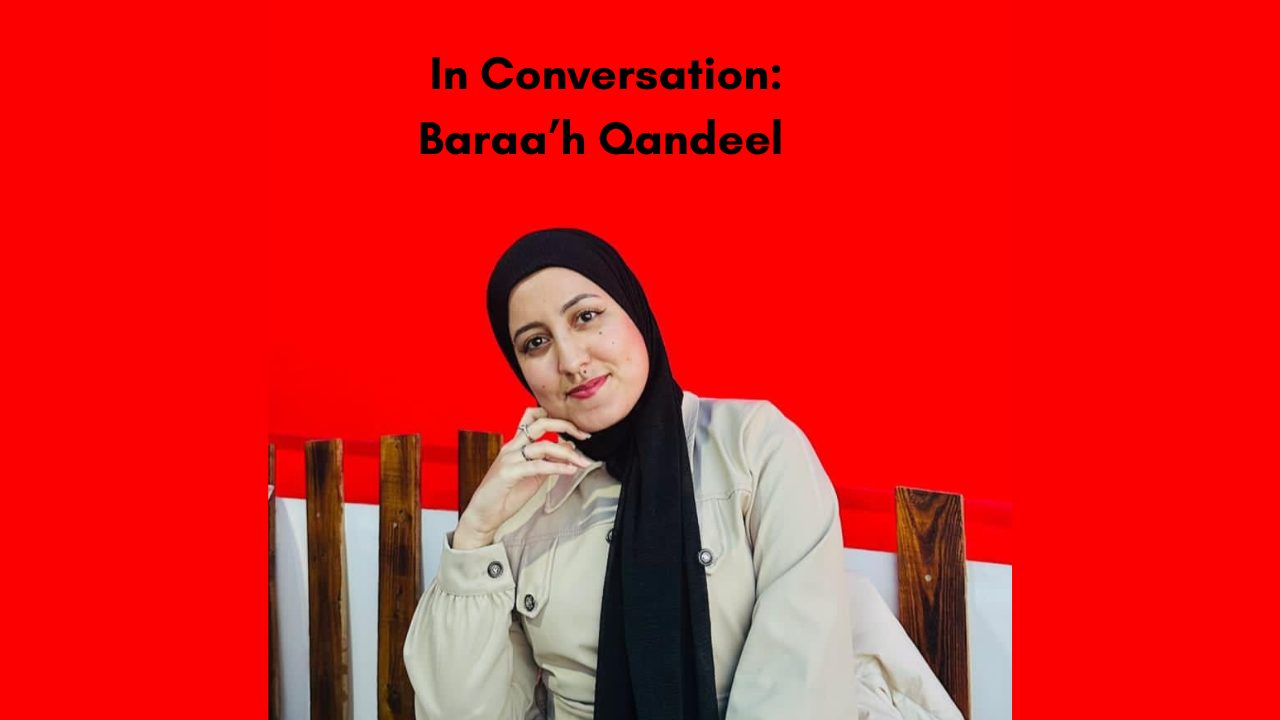
Baraa’h Qandeel was one of the 16 emerging literary translators accepted to our Summer 2025 Gaza Literary Translation Workshop, supported by Palestine Writes. One of her self-translated poems, “Suffocation,” appeared in ArabLit this summer, and you can read more of her work at We Are Not Numbers. Now, she is working to raise money for graduate school.
While gasping for breath, I write. While my heart is panting, I count all my organs. Who will delete this wound from memory? Who will draw the hardships from my heart? Who will calm it?
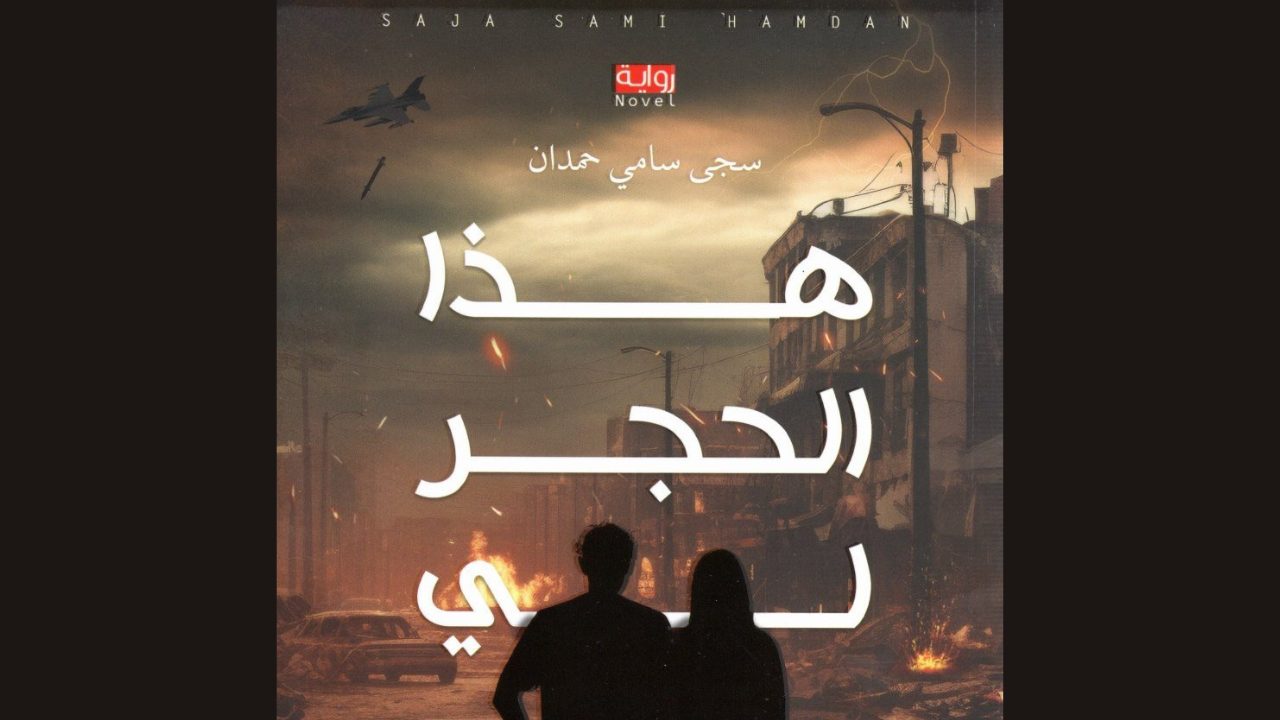
This excerpt comes from pages 34–37 of Saga Hamdan’s 2024 debut novel This Stone is Mine (هذا الحجر لي), a story of love and loss between Gaza and Jenin.

“I have always tried to keep an eye on death, making plans to distract it, to make it wait, so that it would get bored and leave what remains of me, my remains. We are all remains here.” -Nima Hasan

“The world is small,” they say. But Gaza taught me that the world is too big to be shaken by the small tragedies that happen here. Too big to care about a starving human being who only dreams of crossing a crossing.