
From the KITCHEN: ‘Teita’s Bitter Orange Jam’
We are around 25% of the way toward our goal with our summer “Buy a Back Issue” campaign. This essay, by Egyptian author and food scholar Salma Serry, appeared in KITCHEN issue of the magazine.

We are around 25% of the way toward our goal with our summer “Buy a Back Issue” campaign. This essay, by Egyptian author and food scholar Salma Serry, appeared in KITCHEN issue of the magazine.

Here, Khaldah Salih and Fathima Cader interweave a translation of “October Al Akhdar” with their reflections on the lessons that historic and ongoing struggle in Sudan provide for liberation struggles everywhere.

This essay is from the Spring 2025 GRIEF issue of ArabLit Quarterly.

“The hunger I’m experiencing now is not what I imagined. It’s not what you imagine, dear reader. It’s not just an empty feeling in your stomach. It’s a numbness that spreads from the gut to the brain. It blurs memories, weakens vision, and turns every thought into a deep excavation that the mind can’t bear. Hunger steals the simplest human abilities: concentration, patience, sensation, the desire to say something. Thinking becomes a luxury. Words become weights that cannot be lifted.”
This essay is from the Spring 2025 GRIEF issue of ArabLit Quarterly.

Gaza-based Palestinian author Alaa Alqaisi asks herself the question posed more than half a century ago at the end of Ghassan Kanafani’s “Men in the Sun”: Why didn’t they knock on the walls of the tank?
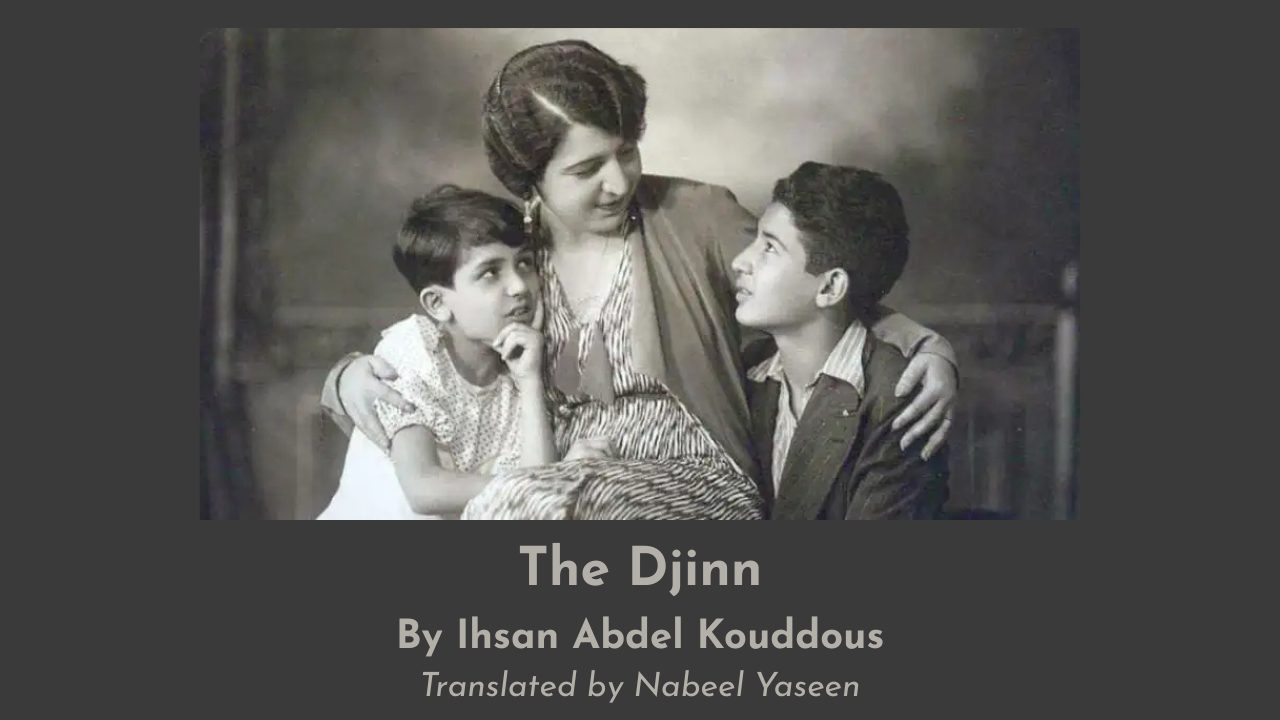
The prolific and popular Ihsan Abdel Kouddous (1919–90) tells us about his run-in with djinn.
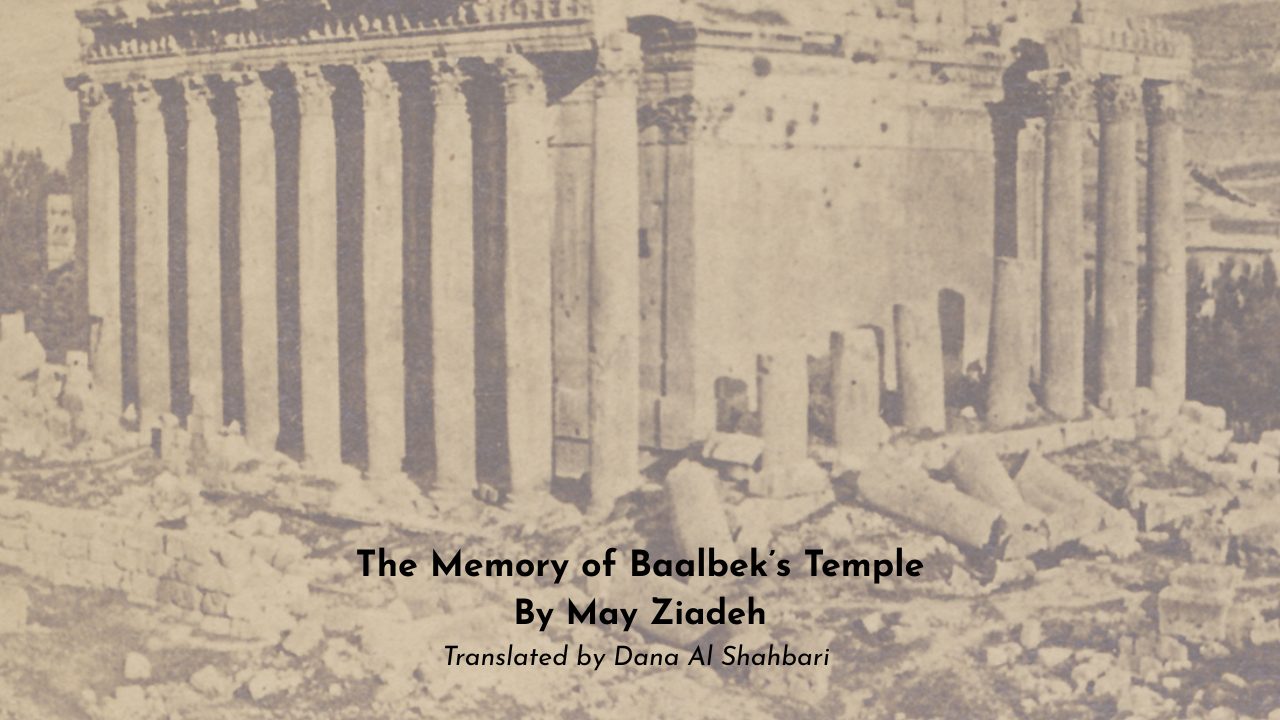
May Ziadeh stands before the ruins of Baalbek in 1911 and reflects on the nature of impermanence and the colonial designs of Westerners.
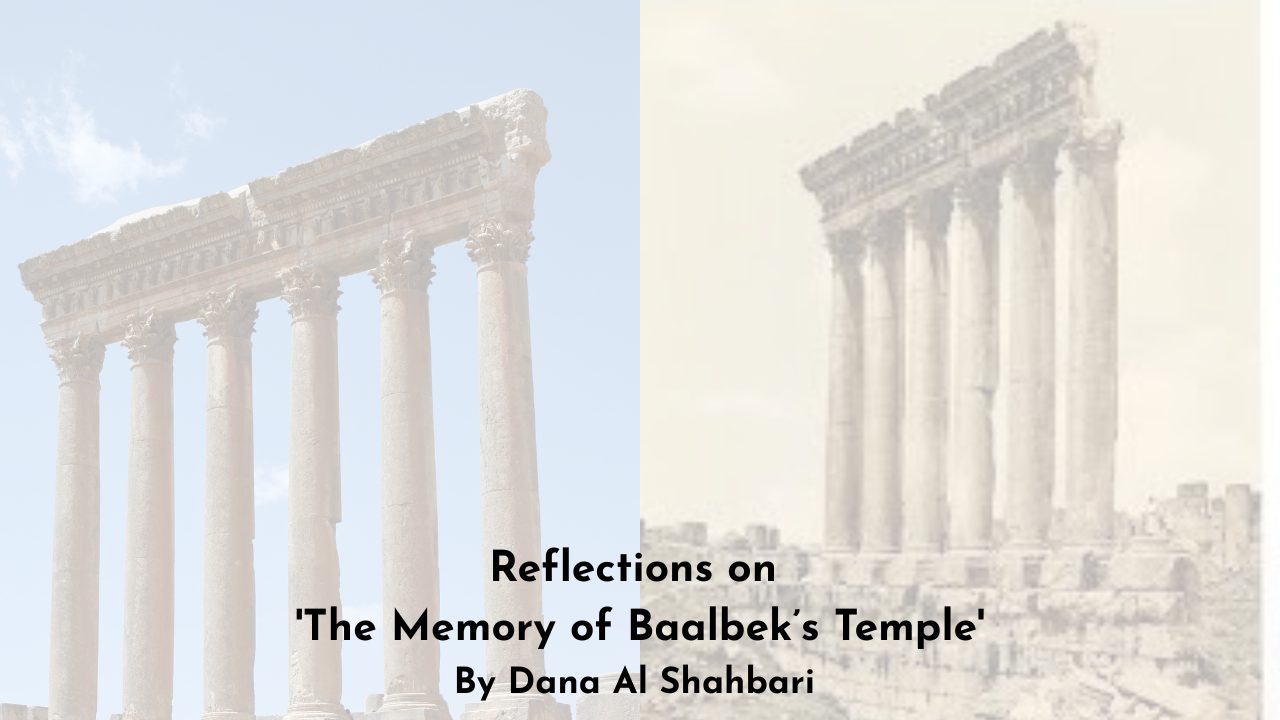
Dana Al Shahbari introduces May Ziadeh’s “The Memory of Baalbek’s Temple,” noting that when Ziadeh (1886-1941) boarded a steam train from Beirut to Baalbek, she returned “not only with a memory, but with a vision.”