Translating for the Egyptian Stage
In this “BETWEEN TWO ARABIC TRANSLATORS” conversation, Yasmeen Hanoosh and Sarah Enany talk about some of the particulars about translating for the stage and, particularly, for song.
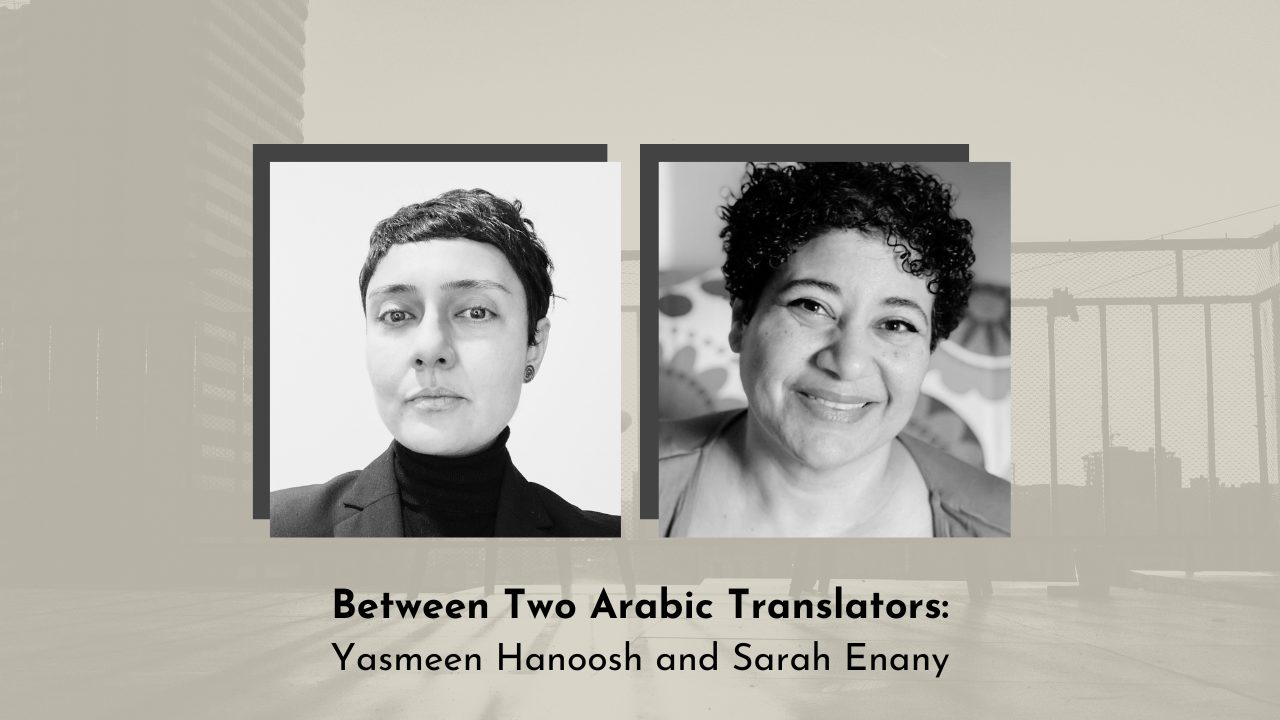
In this “BETWEEN TWO ARABIC TRANSLATORS” conversation, Yasmeen Hanoosh and Sarah Enany talk about some of the particulars about translating for the stage and, particularly, for song.

In this “BETWEEN TWO ARABIC TRANSLATORS” conversation, Yasmeen Hanoosh and Michelle Hartman discuss how the conceptual framework of solidarity raises important questions about translation, what it means to share (or not share) political commitments with an author, and ways of making co-translation equitable.
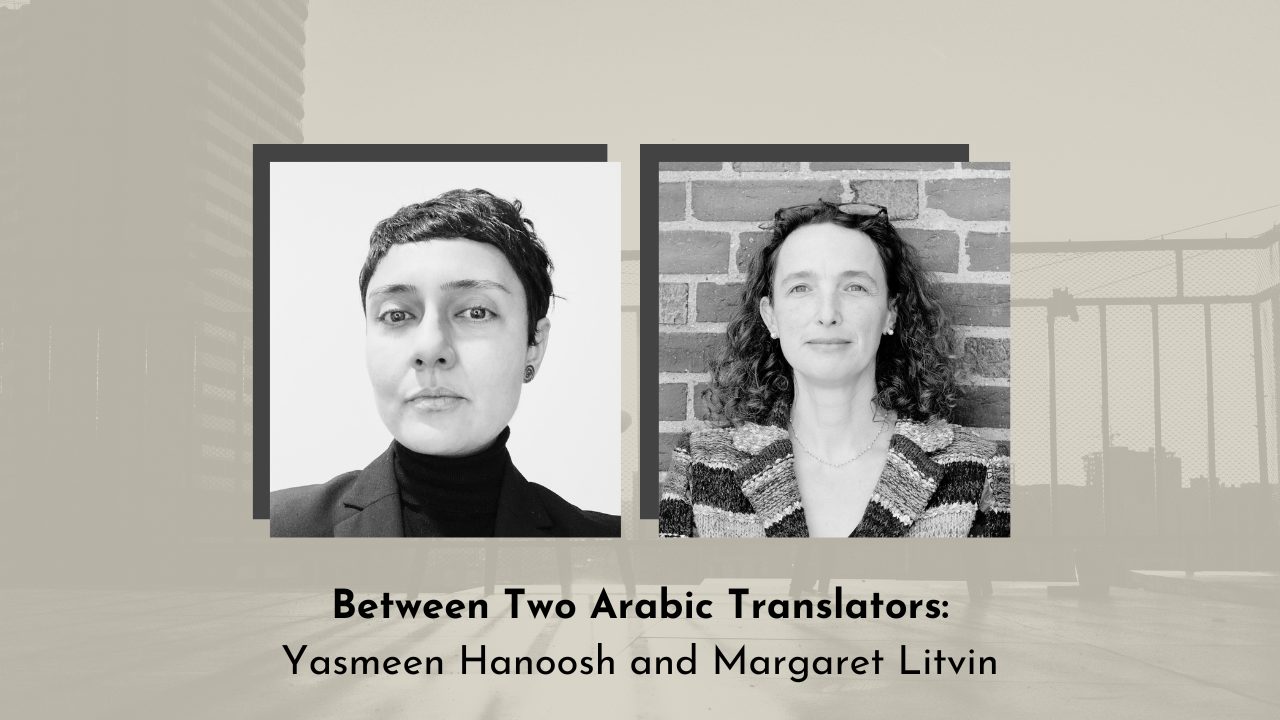
In this “BETWEEN TWO ARABIC TRANSLATORS” conversation, Yasmeen Hanoosh and Margaret Litvin discuss the triangulation of translating Arabic literature and Soviet Russia into English, vanishing intertexts, and why translating Sonallah Ibrahim’s Ice into a single language would have been like “putting salad through a blender.”
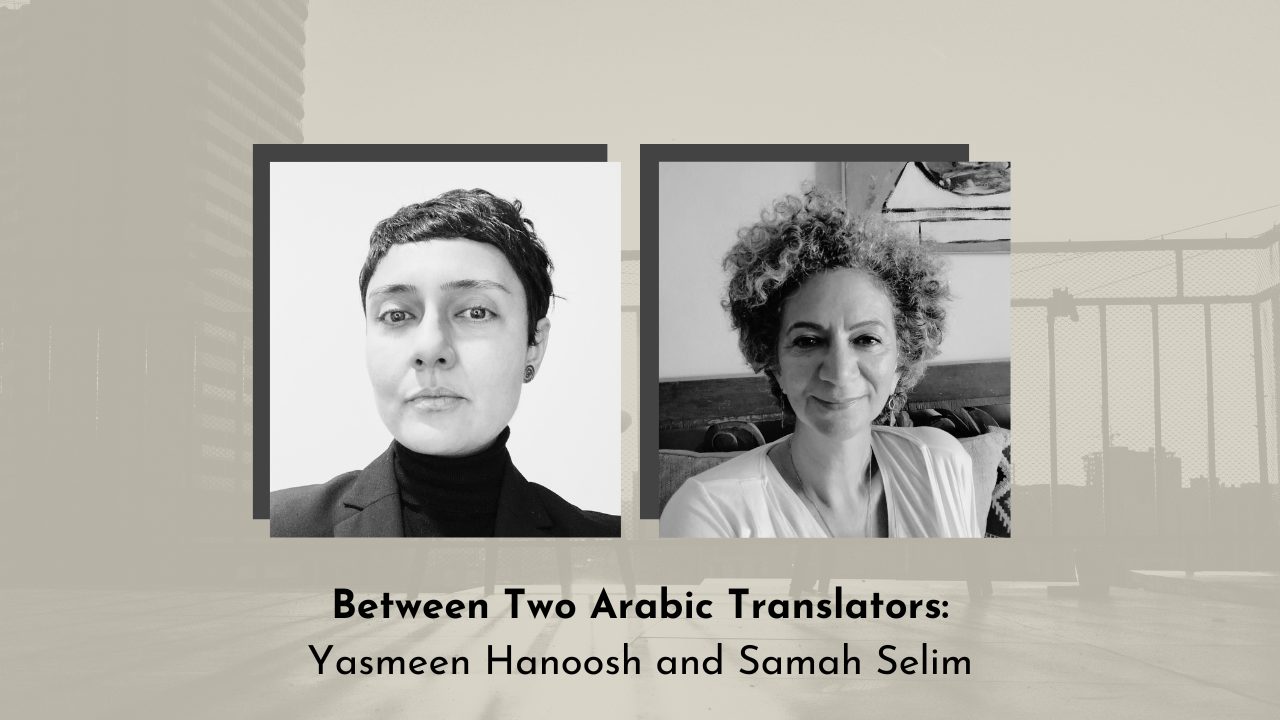
In this “BETWEEN TWO ARABIC TRANSLATORS” conversation, Yasmeen Hanoosh and Samah Selim discuss authorship and adaptations in translated texts, Samah’s “Turjoman” project and the ways in which the field of translation is specific to location, her translation of Arwa Salih, and the “small arsenal of knowledge, resilience, and love” Salih’s work continues to bring into the world.
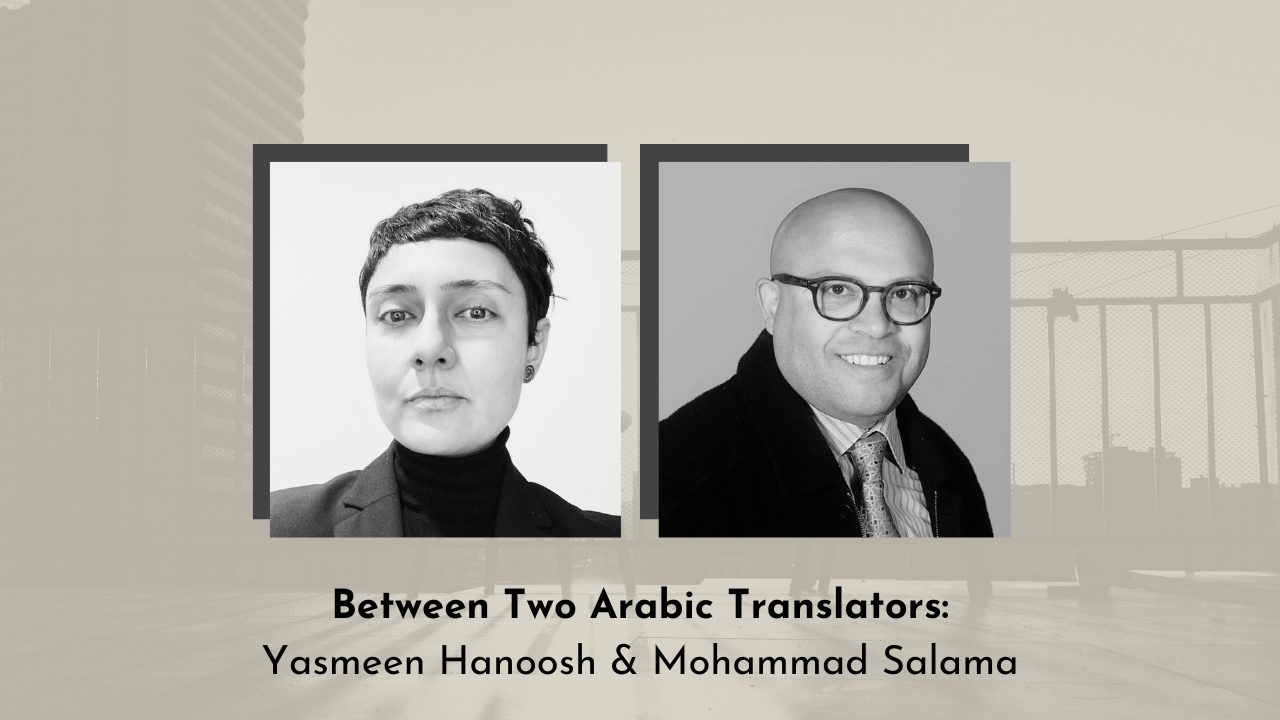
In our second “BETWEEN TWO ARABIC TRANSLATORS” conversation, Yasmeen Hanoosh and Mohammad Salama discuss “how languages—and translations—shape the way we understand the Qur’an, Islam, and the broader cultural world they inhabit,” how translations can mean an ” epistemically violent displacement of the Qur’an from its own terms of meaning,” and what a real decolonization of Euro-American Qur’anic Studies would look like.

In our first “BETWEEN TWO ARABIC TRANSLATORS” conversation, Yasmeen Hanoosh and Marilyn Booth discuss the outlines and possibilities of gender-conscious translation, how a translator can be transparent about their choices, and Marilyn’s translation of Alis al-Bustani’s صائبة, (Sa’iba 1891), and the “need to advocate for, and translate, these earlier works.”
Our forthcoming series, “Between Two Arabic Translators,” will be a unique series of conversations that delve into the power dynamics inherent in the translation of Arabic texts. Hosted by Yasmeen Hanoosh.