Translating for the Egyptian Stage
In this “BETWEEN TWO ARABIC TRANSLATORS” conversation, Yasmeen Hanoosh and Sarah Enany talk about some of the particulars about translating for the stage and, particularly, for song.
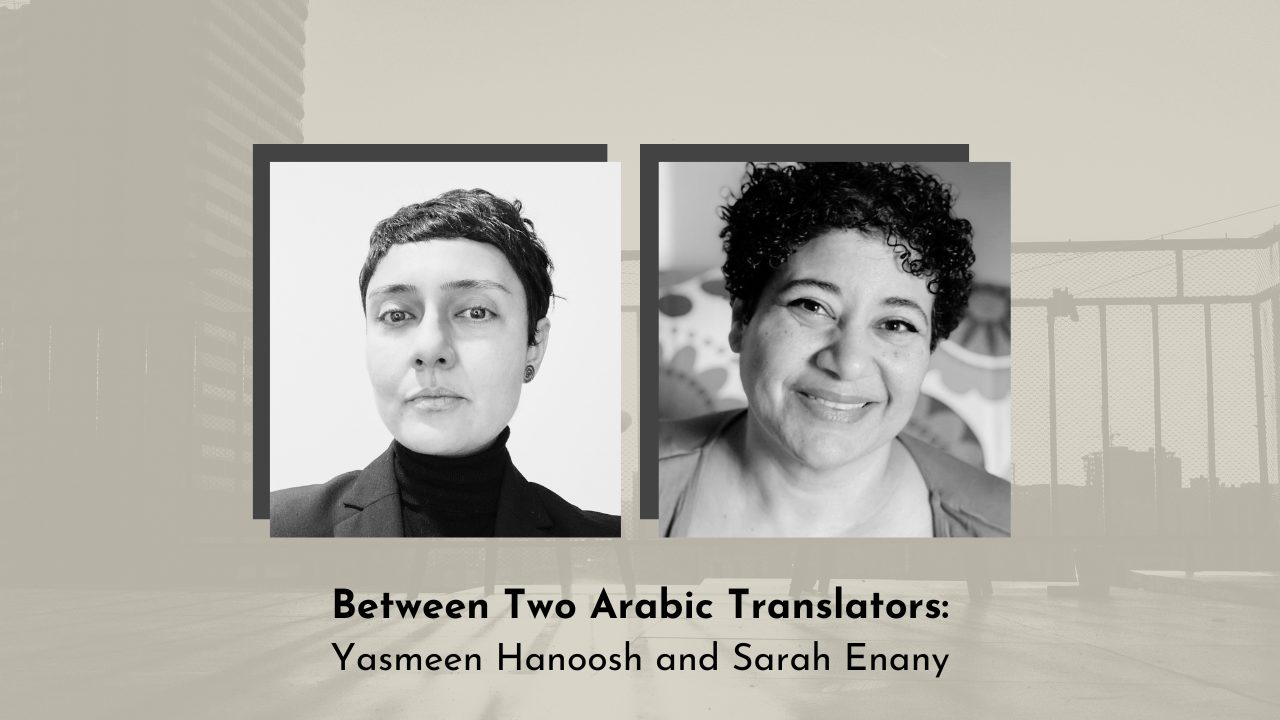
In this “BETWEEN TWO ARABIC TRANSLATORS” conversation, Yasmeen Hanoosh and Sarah Enany talk about some of the particulars about translating for the stage and, particularly, for song.
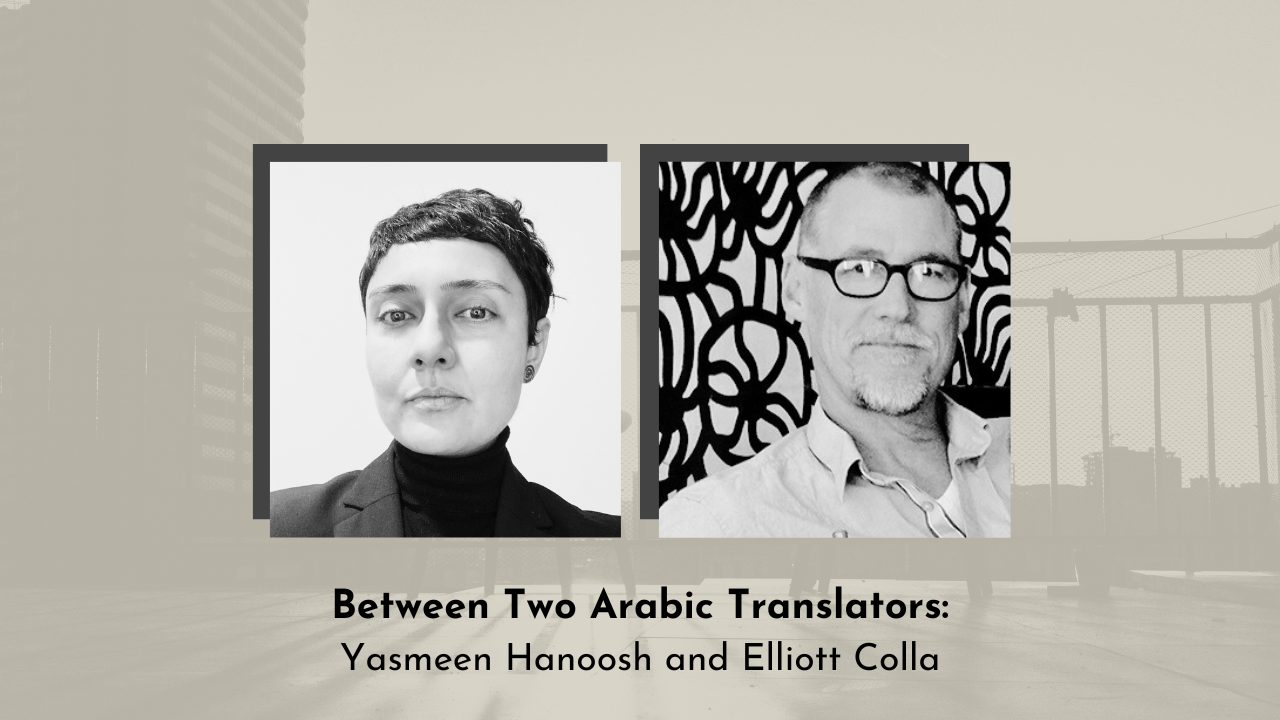
In this “BETWEEN TWO ARABIC TRANSLATORS” conversation, Yasmeen Hanoosh and Elliott Colla look into two dimensions of translation, which Colla calls the solidaristic and the hegemonic, and the particular role translation has played in the US military.

In this “BETWEEN TWO ARABIC TRANSLATORS” conversation, Yasmeen Hanoosh and Zia Ahmed discuss approaching Arabic translation via English and Urdu, the layers of “outsider-ness” in translation, and the boom of narrative fiction in Oman.
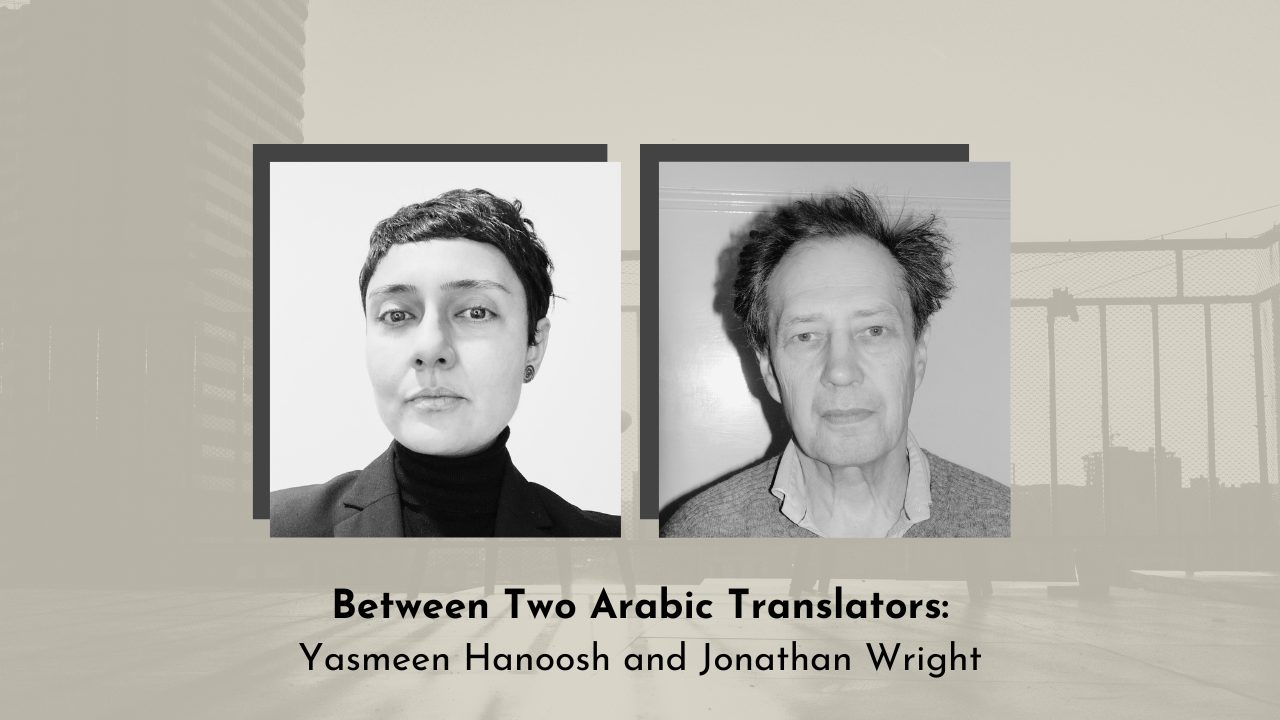
In this “BETWEEN TWO ARABIC TRANSLATORS” conversation, Yasmeen Hanoosh and Jonathan Wright discuss Wright’s start in literary translation, its divergence from the sort of translation he practiced as a journalist, and his ideas about what he calls Arabic polyglossia.

In this “BETWEEN TWO ARABIC TRANSLATORS” conversation, Yasmeen Hanoosh and Michelle Hartman discuss how the conceptual framework of solidarity raises important questions about translation, what it means to share (or not share) political commitments with an author, and ways of making co-translation equitable.

In this “BETWEEN TWO ARABIC TRANSLATORS” conversation, Yasmeen Hanoosh and Mahmoud Hosny Roshdy discuss the idea of untranslatability (and perhaps, by extension, unreadability) and the work Salim Barakat, and why, if a translation were complete and perfect, this might mean that the work was born dead.
In this “BETWEEN TWO ARABIC TRANSLATORS” conversation, Yasmeen Hanoosh and Margaret Litvin discuss the triangulation of translating Arabic literature and Soviet Russia into English, vanishing intertexts, and why translating Sonallah Ibrahim’s Ice into a single language would have been like “putting salad through a blender.”
In this “BETWEEN TWO ARABIC TRANSLATORS” conversation, Yasmeen Hanoosh and Samah Selim discuss authorship and adaptations in translated texts, Samah’s “Turjoman” project and the ways in which the field of translation is specific to location, her translation of Arwa Salih, and the “small arsenal of knowledge, resilience, and love” Salih’s work continues to bring into the world.
maia tabet and yasmeen hanoosh are both Arabic-English literary translators who have spent decades living and translating from multiple diasporic locales. In this conversation, they retrace the trajectories of their experience as translators, uprooted Arab women, and bilingual diasporic subjects to identify intersections and divergences along their paths.