
‘A Giant Multi-room Museum Piece’: Ibrahim al-Koni’s ‘The Fetishists’
“Yet if al-Koniʹs shorter ‘Bleeding of the Stone’ and ‘Gold Dust’ are small paintings you can hang on a living-room wall, then The Fetishists is a giant multi-room museum piece.”

“Yet if al-Koniʹs shorter ‘Bleeding of the Stone’ and ‘Gold Dust’ are small paintings you can hang on a living-room wall, then The Fetishists is a giant multi-room museum piece.”
As-Sanoussi’s stories had wide influence on Sudan’s ‘80s generation writers, who found inspiration and guidance in her condensed artistic practice.
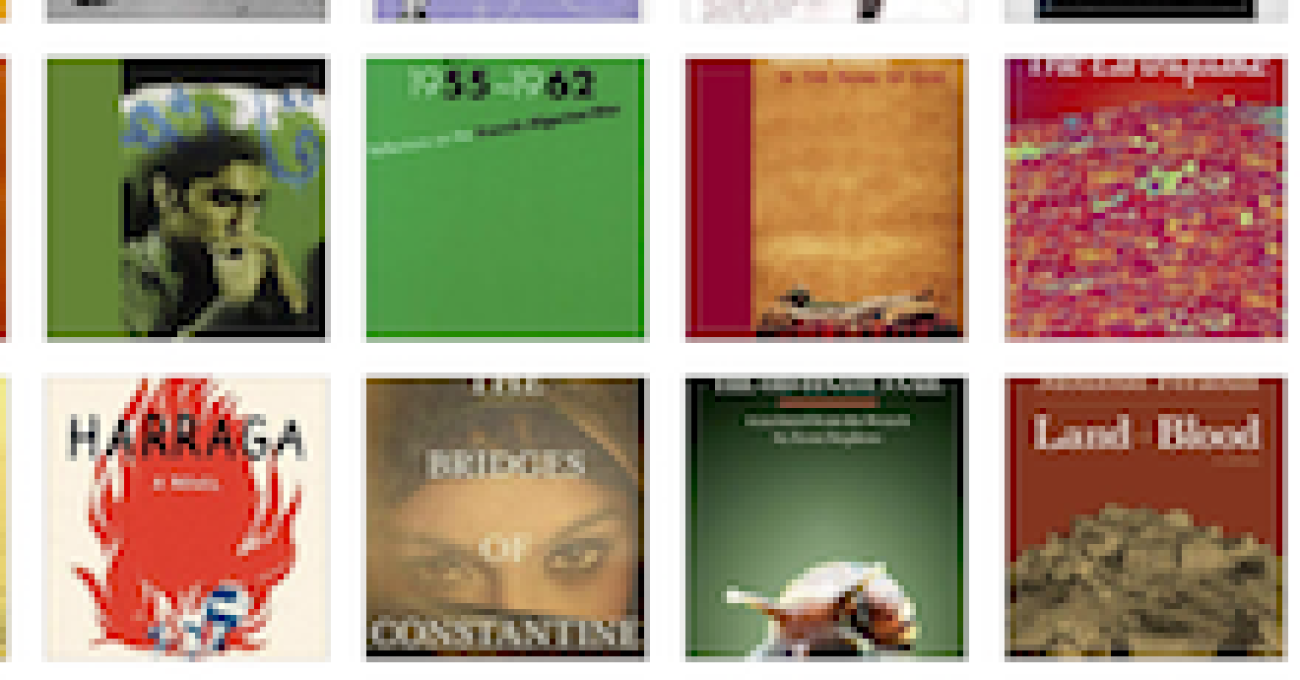
Since 1956, nearly 100 novels, memoirs, and poetry collections written by Algerian writers have appeared in translation. Among these works, a third have appeared since 2010.
“A bullet doesn’t kill, what really kills is the silence of the oppressed.”

The novel is led by a central narrator who once lived in Soba, an ancient city that was part of the late Christian Kingdom of Alawa, in what’s now central Sudan. It collapsed during the sixteenth century.

He was compelled to throw his notebook
so he bent to lift up a brick,
and could see the sniper’s beard
soaked in his own blood

“Without falling victim to affectation, artificiality, or modernist arbitrariness, he has been able to coin creative expressions that have moved beyond the pages of his short stories into daily use.”

“Often, readers tell me I should write about one subject or another, and I don’t like this sort of relationship, where readers approach the writer as though they’re a machine or a mythical creature.”
These critiques closely follow the impact of the ’60s poetry and the evolution of major cultural currents such as the “Bush and the Desert,” which advocated an Afro-Arab identity, followed by “Apademak,” which called for a pure Sudanese culture.