From ‘My Butterfly That Does Not Die’
Refaat Al Areer had set the scene, declaring, “If I must die,” and Alaa Al Qatarawi’s sorrow metamorphosed into a butterfly that perseveres. She writes, “If I die, my butterfly does not die.”
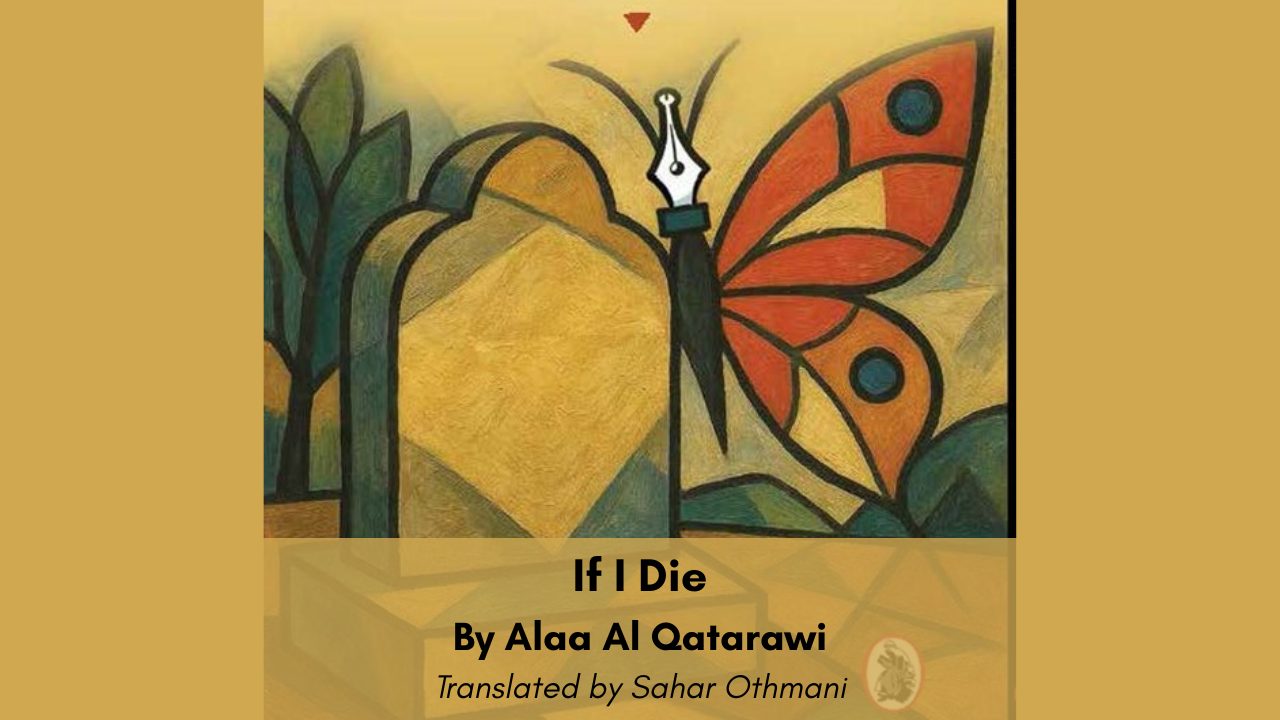
Refaat Al Areer had set the scene, declaring, “If I must die,” and Alaa Al Qatarawi’s sorrow metamorphosed into a butterfly that perseveres. She writes, “If I die, my butterfly does not die.”

Adabiyat is a virtual book club for readers of Arabic literature to come together monthly and debate, interpret, and appreciate written works of the Arab world and its diaspora. Houcine Chraïbi is a member of this club and writes of how his enlightening experiences during meetings and the welcoming energy of the Adabiyat community has rekindled his relationship with reading and enriched his life.

“With Yehia, the play is everything. So, we make sure that sets, costumes and props fit in one car. This way we are ready to perform at short notice.” – Maria Douaihy on “Qornet el Bayda.”
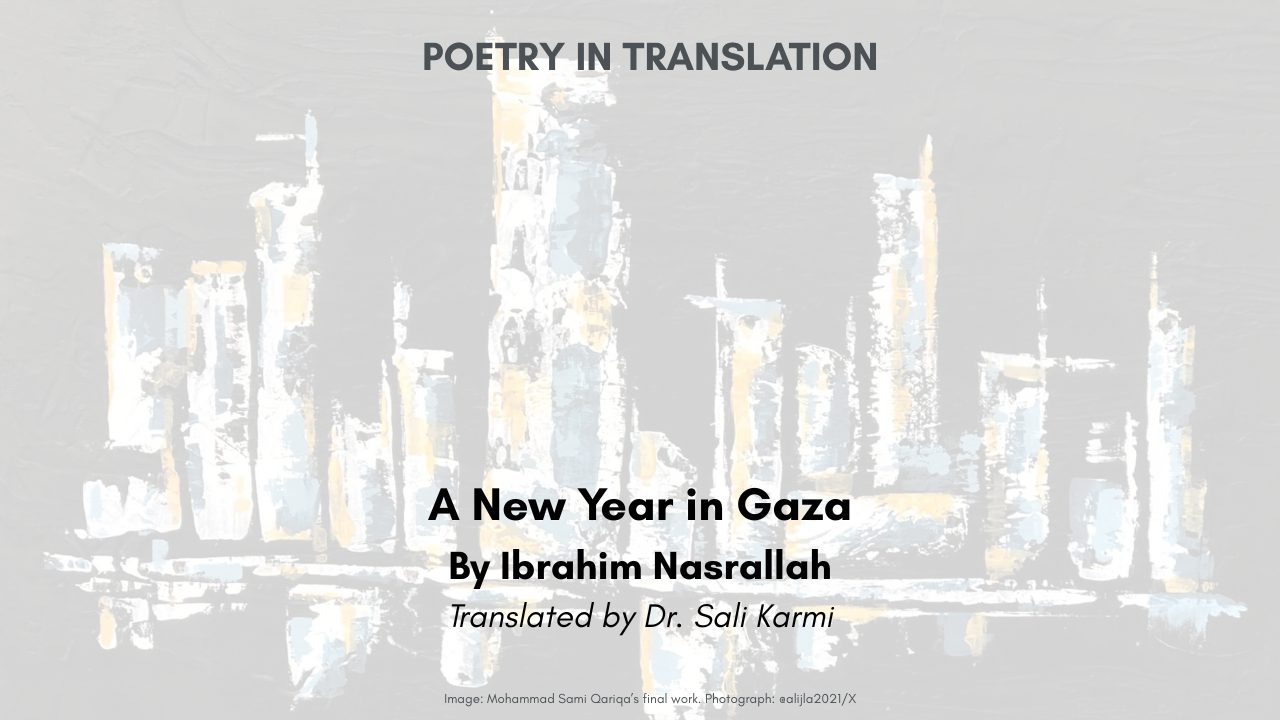
The people named in this poem are the writers, painters, and musicians martyred in the genocide. They are only a few of the many artists who were martyred in the past two years of war against Gaza.
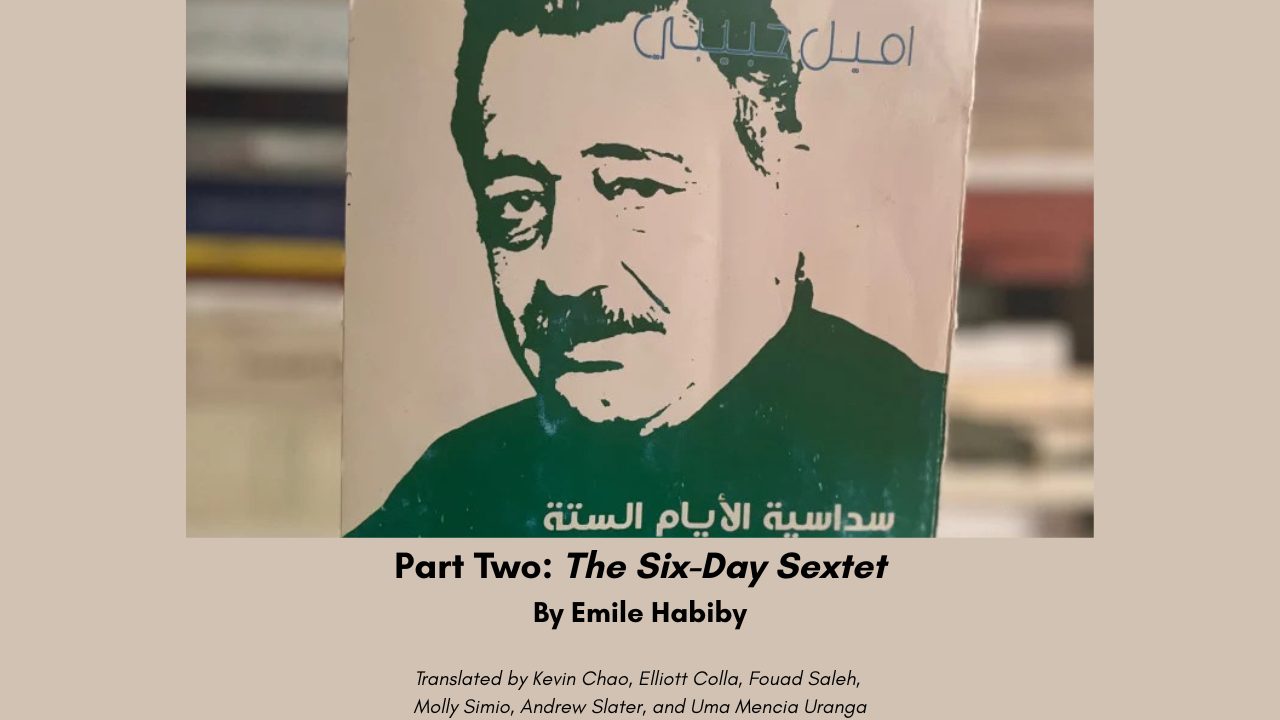
Over the next six weeks, we will be publishing installments of Emile Habiby’s The Six-Day Sextet, which is available in an open-access, non-commercial translation by Invisible Dragoman. The next installment is set to appear February 16, 2026.
A letter from ArabLit editor Ibtihal Rida Mahmood to May Ziadeh (1886-1941).
Organizers today announced winners of the Spring 2026 PEN Translates awards, and among the 18 selected titles were three in Arabic.
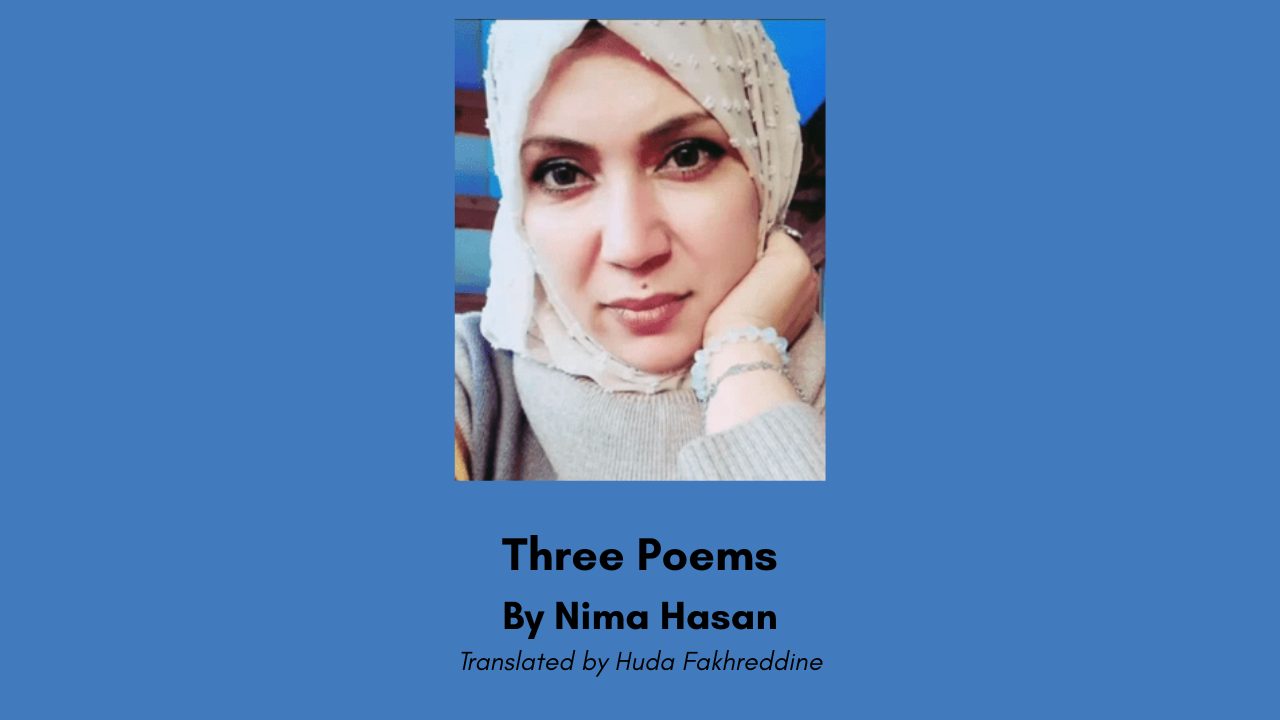
“Hold me before the game ends. / Like everything else, / grief needs time / to become a language.”
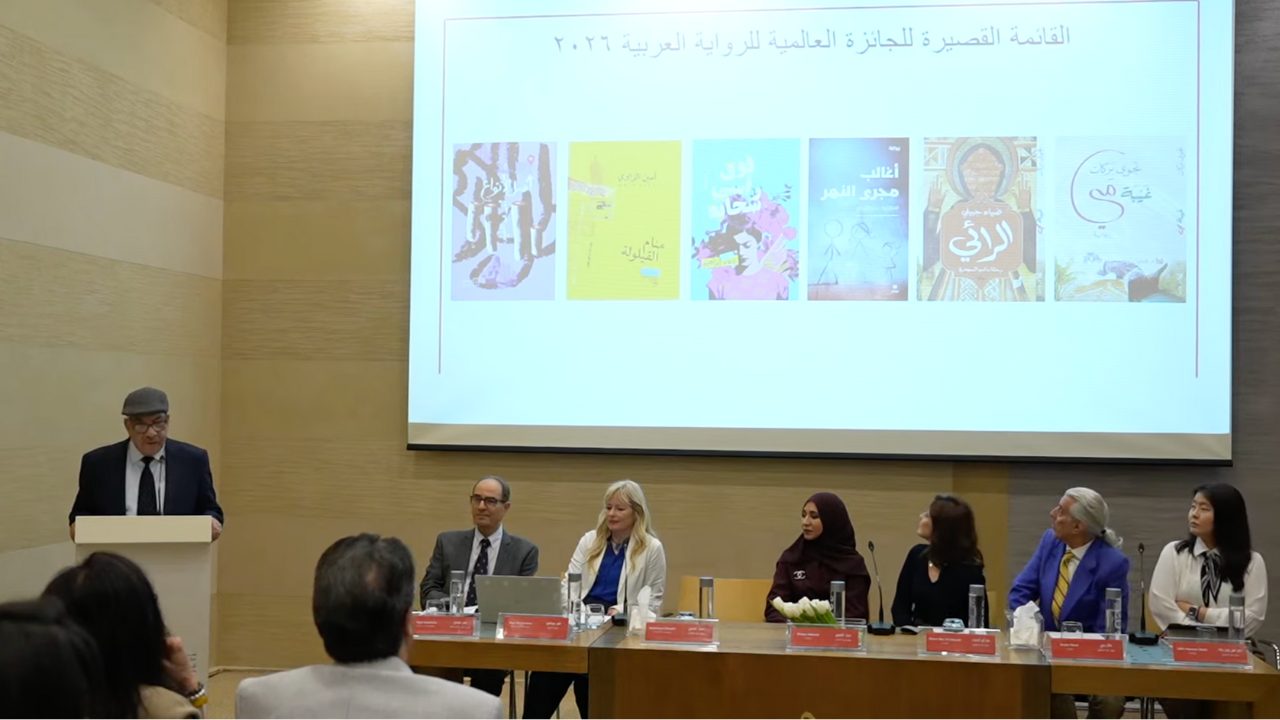
The chair of the judges for the 2026 International Prize for Arabic Fiction, Mohamed Elkadhi, today announced the prize’s 2026 vibrant six-book shortlist in Manama, Bahrain.