Ramadan Kareem, ya Gaza
“Gaza does not resemble herself in Ramadan.”
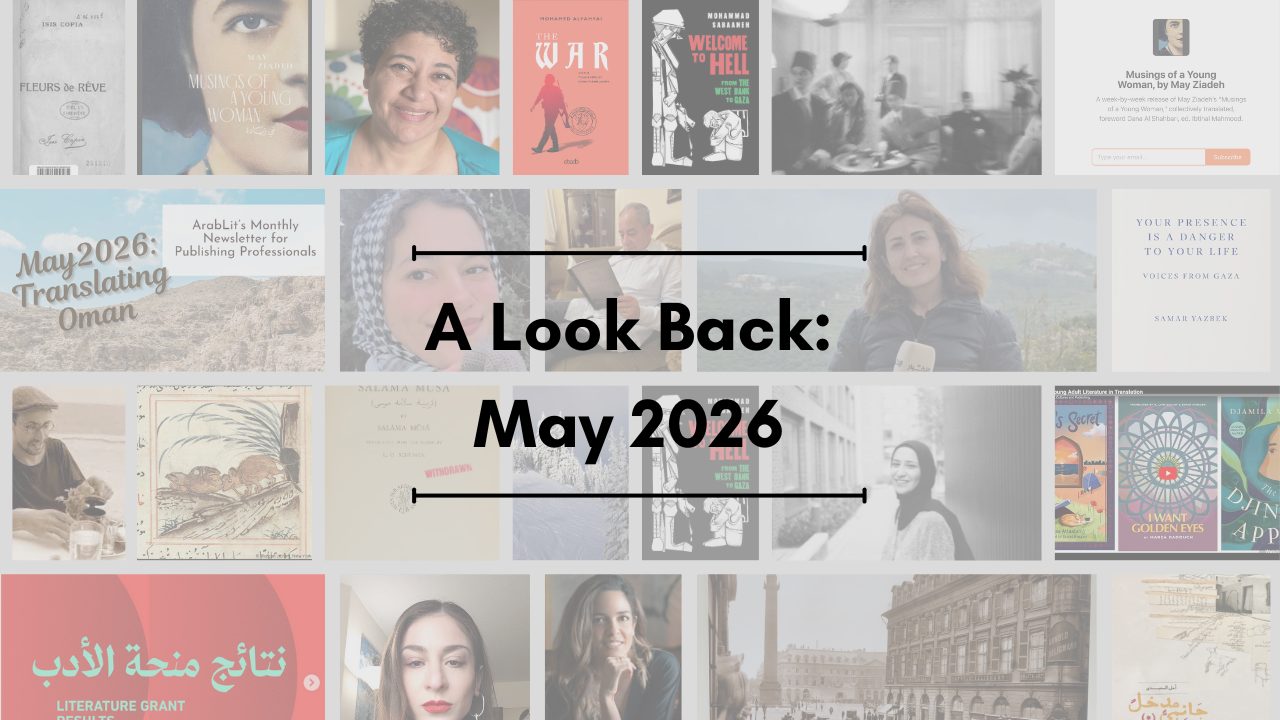
Organizers also note that all literary works on this year’s shortlists will be eligible for translation support from Arabic into any world language.
I Am at Your Door was written as a last resort for survival, as another form of life. In its pages, we read: “Is there anything more beautiful than writing while you are being exterminated? And here, I mean the ugly meaning of beauty.”
Over the next six weeks, we will be publishing installments of Emile Habiby’s The Six-Day Sextet, which is available in an open-access, non-commercial translation by Invisible Dragoman.
Algerian novelist Said Khatibi talks with us about his latest novel, and the conversation turns to organ theft, the global shifts in the late ‘80s and early ‘90s, and what he hopes to illuminate with crime novels: not the whodunit, but the why.
Organizers of the Bait AlGhasham DarArab Prize today announced 2026’s winning works in three categories: Authors, Translators, and Omani Publications.
Refaat Al Areer had set the scene, declaring, “If I must die,” and Alaa Al Qatarawi’s sorrow metamorphosed into a butterfly that perseveres. She writes, “If I die, my butterfly does not die.”
“With Yehia, the play is everything. So, we make sure that sets, costumes and props fit in one car. This way we are ready to perform at short notice.” – Maria Douaihy on “Qornet el Bayda.”
The people named in this poem are the writers, painters, and musicians martyred in the genocide. They are only a few of the many artists who were martyred in the past two years of war against Gaza.